

Key takeaways
- Cause: RBI regulations require 3D Secure (OTP) authentication and manual approval; recurring charges don’t trigger OTP, so Indian banks block them automatically.
- It’s most common when the merchant is outside India, an international provider processes the charge, or the payment is recurring or automatic.
- This is a bank-level restriction that Sendspark cannot override.
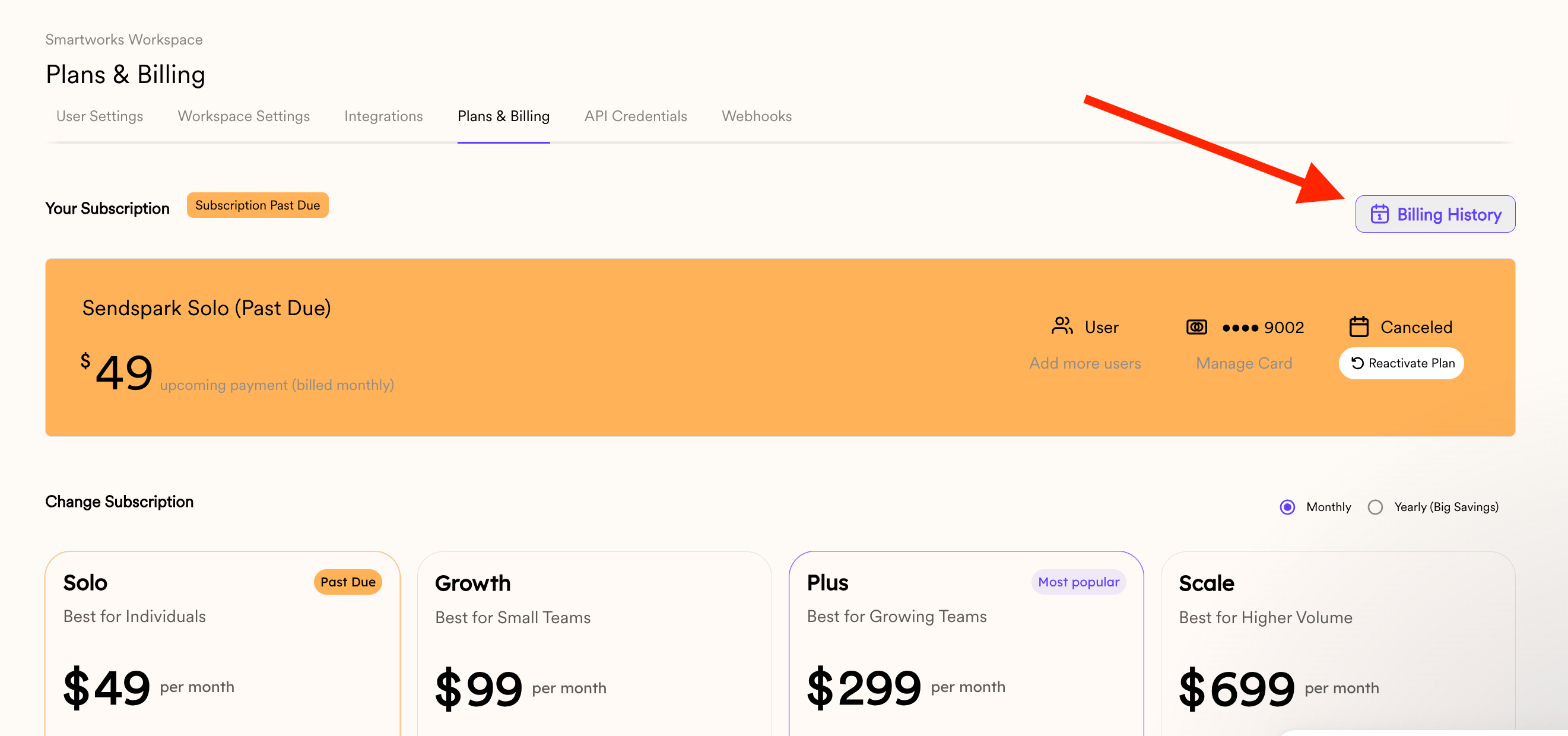
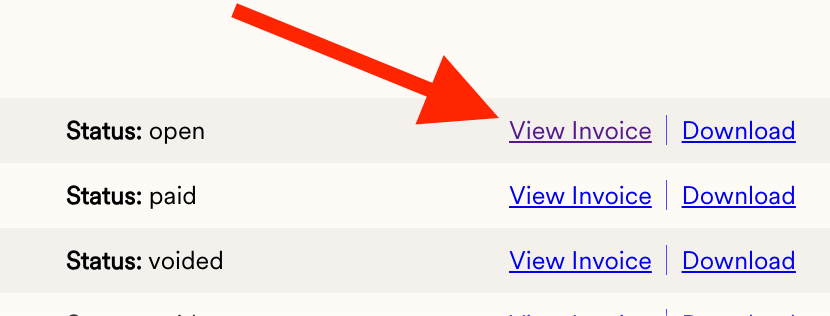
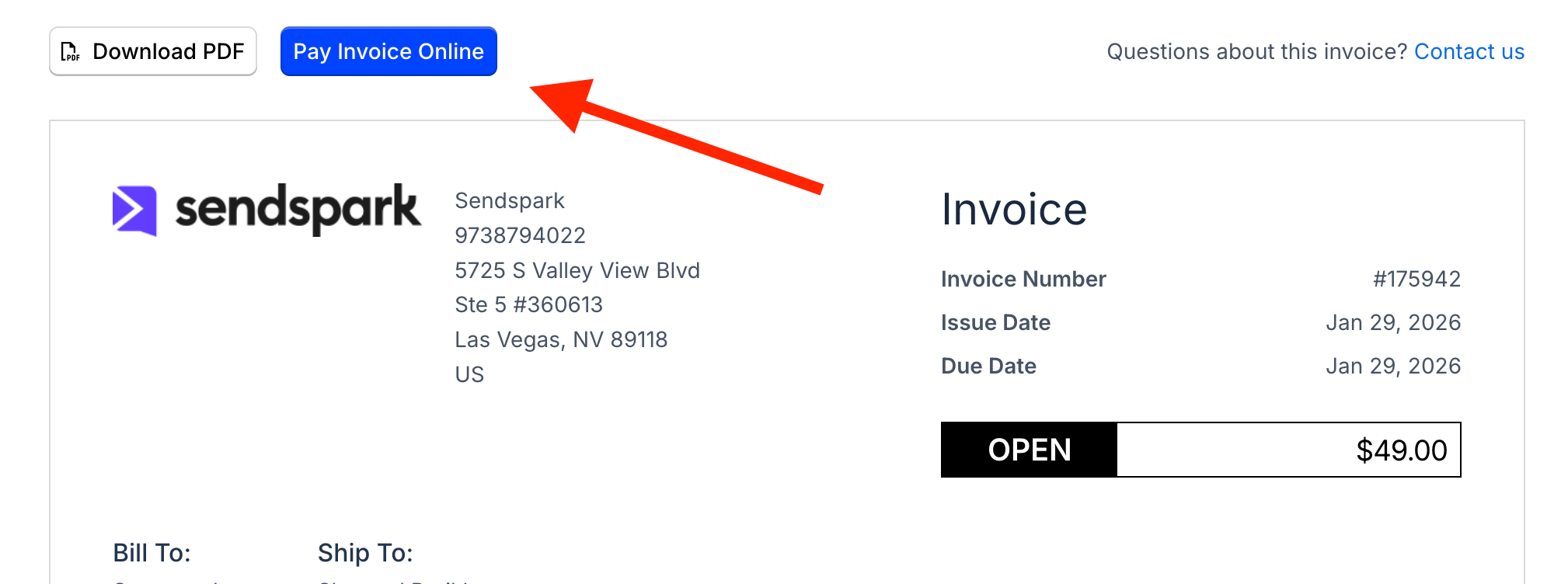
- Workaround: pay the open invoice manually (Plans & Billing → Billing History → View Invoice → Pay Invoice Online), which is treated as a one-time payment, so OTP is requested and allowed.
The Root Cause: 3D Secure (OTP) & Recurring Payments in India
Most credit and debit cards issued by Indian banks are subject to RBI (Reserve Bank of India) regulations, which require:- 3D Secure authentication (OTP) for online payments
- Manual customer approval for each transaction
- The merchant is outside India
- The payment is processed by an international payment provider
- The charge is recurring or automatic (subscriptions, renewals, retries)
Why it worked once but not again
- The initial purchase often succeeds because it includes OTP authentication.
- Recurring charges do not trigger OTP, so the bank blocks them automatically.
- When the renewal runs, the bank rejects it with errors like:
- “Card doesn’t support this payment”
- “Authentication required”
- “Recurring payment not allowed”
✅ The Solution: Pay the Invoice Manually
The most reliable workaround is to pay the invoice manually, where OTP authentication is supported.How to Pay Your Invoice Manually
- Log in to your account
- Open Plans & Billing from your account settings
- Click Billing History
- Find the invoice with the status open, and click its View Invoice link
- Click Pay Invoice Online
- Complete the payment (OTP will be requested by your bank)
- It’s treated as a one-time payment
- OTP authentication is allowed
- You remain in full control of the transaction
Open your account and click on SEE PLANS

Frequently asked questions
Why does my card fail on renewals but worked the first time?
Why does my card fail on renewals but worked the first time?
The initial purchase often succeeds because it includes OTP authentication. Recurring charges don’t trigger OTP, so your bank blocks them automatically under RBI rules — you may see errors like “Card doesn’t support this payment,” “Authentication required,” or “Recurring payment not allowed.”
Is this something Sendspark can fix on its end?
Is this something Sendspark can fix on its end?
No. This is a bank-level restriction driven by RBI (Reserve Bank of India) regulations, not something Sendspark can override.
How do I pay my invoice manually?
How do I pay my invoice manually?
Log in to your account, open Plans & Billing, click Billing History, find the invoice whose status reads open, click View Invoice, then Pay Invoice Online and complete the payment. Your bank will request OTP, which is supported for one-time payments.
Why does paying manually work when automatic charges don't?
Why does paying manually work when automatic charges don't?
A manual invoice payment is treated as a one-time payment, where OTP authentication is allowed and you stay in full control of the transaction — so it isn’t blocked the way an automatic recurring charge is.